8 Things Men Are Afraid Of
By WiL Turner
Men’s Health Advocate, Fitness, Relationship & Personal Growth Coach Founder of Living Well With WiL & The Becoming Whole Men’s Health Movement
“What defines a man is his willingness to confront the truth about himself.” — WiL Turner
Introduction
For generations, men have been taught an unspoken rule about masculinity that real men should not be afraid or vulnerable. From an early age, many boys learn to hide their fear behind silence, humor, anger, deflection or emotional distance. Instead of being encouraged to understand their emotions, they are often taught to suppress them. Over time, this social conditioning creates a dangerous disconnect between what men feel internally and what they are allowed to express externally.
Neuroscience proves that fear is not weakness. It is a biological survival response. The brain’s amygdala constantly scans the environment for threats, activating the body’s fight-or-flight system when danger is perceived. While this system is essential for survival, emotional and social fears can trigger the same neurological responses as physical danger. The fear of rejection, failure, conflict or judgment can activate stress hormones like cortisol and adrenaline, leading many men to withdraw, shut down emotionally, overcompensate with hyperindependence or aggression.
In my work with men across different backgrounds Black men, gay men, straight men, fathers, professionals, and young men these fears often appear beneath the surface of conversations about belonging, sense of worth, relationships, purpose, and identity. Many men are not afraid of life itself; they are afraid of how they will be perceived, whether they will belong, and whether their lives will ultimately matter. Understanding these fears is not about labeling men as weak. It is about meeting them at the intersections of their lives where they are at and helping men recognize the psychological and emotional realities that shape their behavior, health, relationships, and daily lives.
Why This Matters
When fear remains unspoken, it quietly influences the decisions men make throughout their lives. Many men avoid vulnerability, suppress emotions, or distance themselves from relationships because they were never taught effective ways to communicate their social and emotional needs or safe ways to process fear. Over time, this emotional suppression leads to chronic stress, anxiety, depression, hypertension, isolation; worse case, mental illness. Instead of asking for help or expressing uncertainty, men often feel pressure to maintain the appearance of wholeness, control and strength.
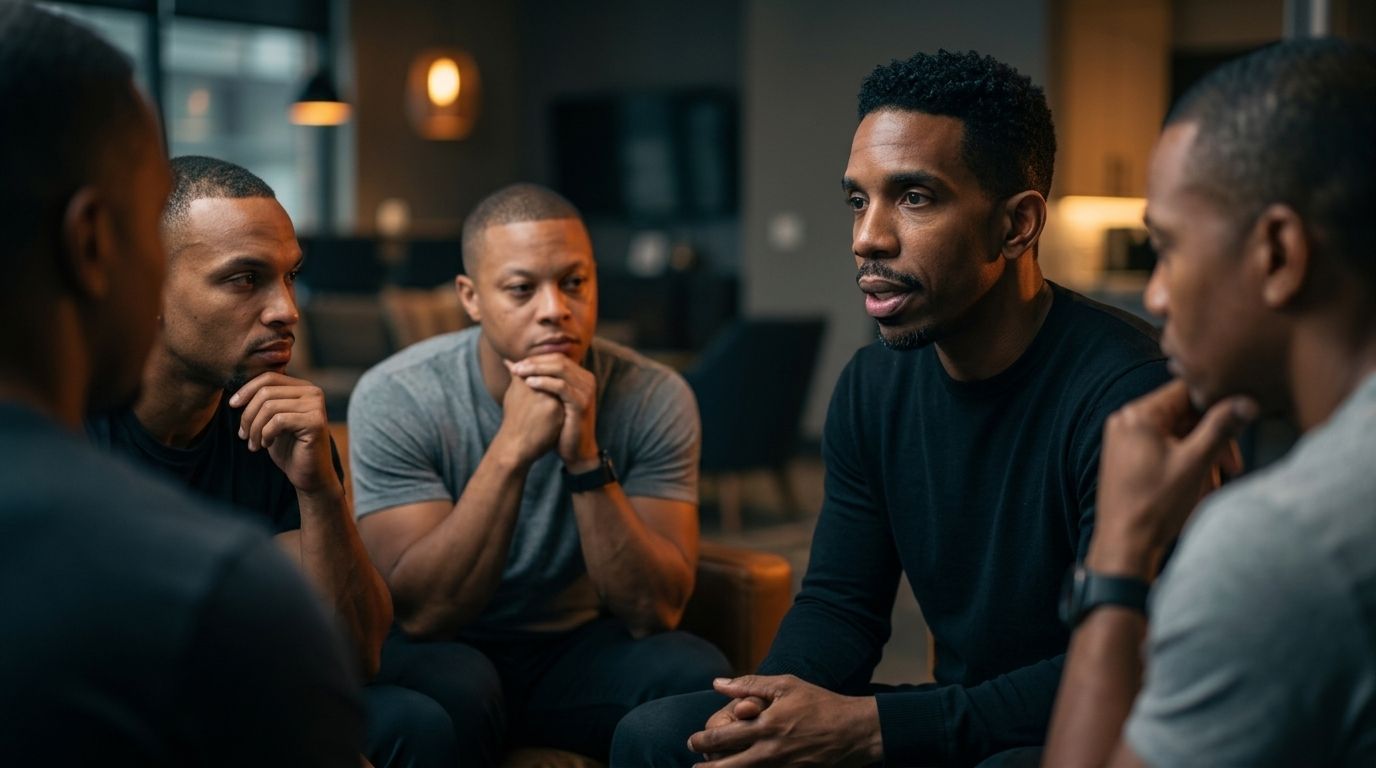
The consequences of emotional isolation is visible across many intersections of men's health. Research consistently shows that men are less likely than women to seek therapy or emotional support, even when experiencing significant stress, anxiety, duress or depression. This reluctance often stems from the stereotypical belief that asking for help undermines masculinity. Yet the reality is that the fears men hide—fear of failure, fear of rejection, fear of loneliness—are often the very struggles that connect men to one another. Acknowledging fear does not diminish a man’s strength. In many ways, it reveals it.
Neuroscience of Fear in Men
Fear is triggered in the brain, but it does not stay there. This fight or flight response occurs in most living things. Especially humans. The amygdala, which acts as part of the brain’s threat detection system, is constantly monitoring adverse circumstances for danger. When something feels threatening, whether it is psychological, emotional or physical harm, criticism, rejection, financial instability, emotional exposure, or social humiliation; the brain can trigger a survival response.
The body prepares itself to fight, flee, freeze, or shut down, even when the threat is mental or emotional rather than physical. During stressful or challenging times, the stress hormones of cortisol and adrenaline are released into the body, increasing the heart rate or blood pressure. Muscles tense. Breathing may become shallow. The nervous system shifts into protection mode. For men who have lived through repeated stress, trauma, instability, discrimination, abandonment, bullying, or emotional invalidation, the brain may become more sensitive to perceived threat over time. In other words, some men are not overreacting. They may be carrying psychological or emotional pressure of which their nervous systems have learned or been conditioned to stay guarded.
The prefrontal cortex is the part of the brain involved in reasoning, emotional regulation, and decision-making. It functions most efficiently when a person feels safe, is able to reflect on adverse situations or the source of psychological and emotional discomfort rather than project or react.
When fear or anxiety is high, the capacity to self regulate and reflect is weakened. This is part of why some men shut down mentally and emotionally, become defensive, irritated, anxious. Instead of embracing moments of vulnerability, he may struggle to clearly communicate his social and emotional needs in moments of stress.
Neuroscience helps us understand that fear is not a character flaw. It is often the nervous system's response to contentious circumstances shaped by traumatic lived experience or social conditions which trigger him to emotionally protect himself in order to survive while in the moment or day to day.
The 8 Things Men Are Afraid Of
Fear of Vulnerability
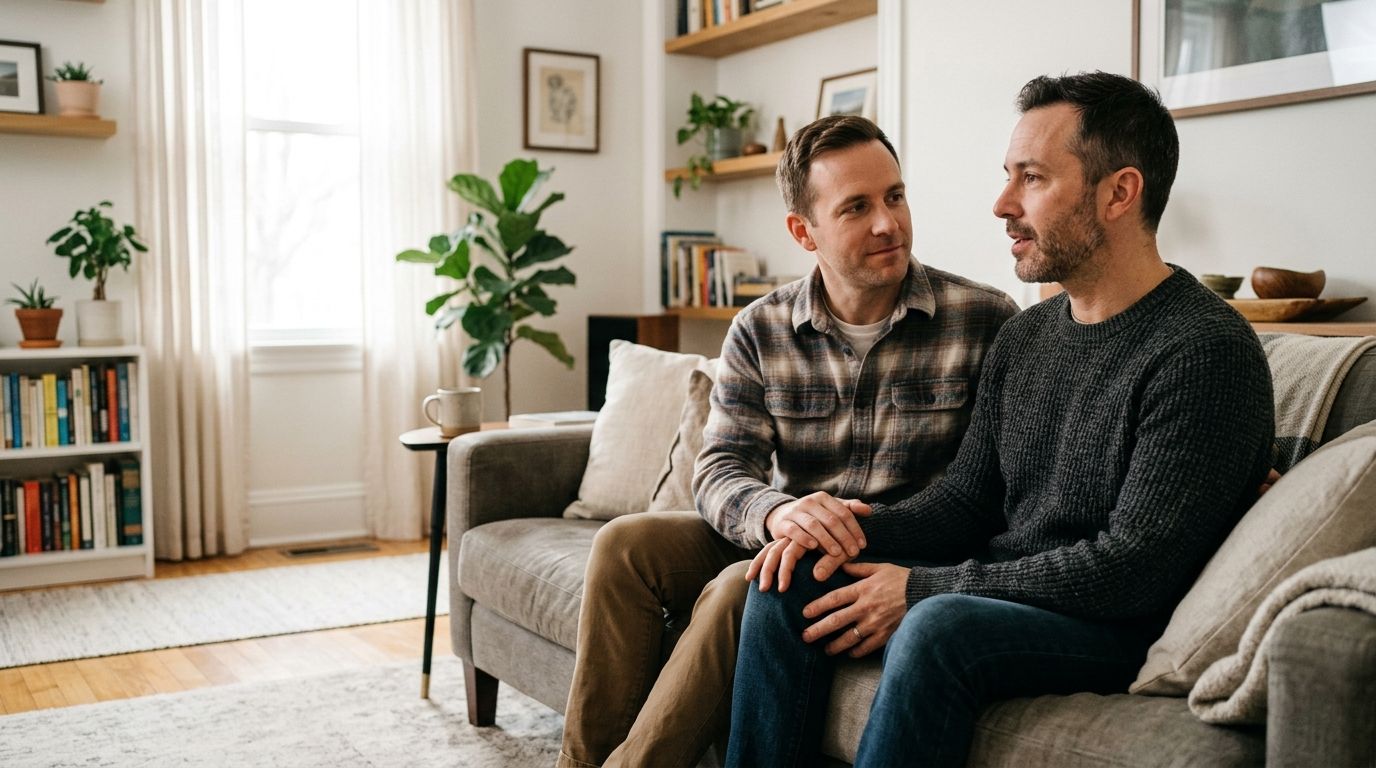
One of the most common fears men experience is vulnerability. Vulnerability requires emotional honesty, unguardedness, admitting need, pain or suffering, uncertainty, insecurity, or the need for psychological, emotional or social support. For many men, vulnerability and expressing their emotions are discouraged during childhood, replaced with the expectations of provision, performance, toughness, and independence. As a result, vulnerability can feel unsafe for men, exposing parts of themselves that they were taught to hide.
However, for all human beings emotional openness is essential for healthy relationships and psychological well-being. When men suppress or repress vulnerability, they often struggle to form deep emotional connections with partners, friends, family members or coworkers. Instead of expressing sadness or fear, they may appear socially intimidating, beyond reproach, distant or emotionally unavailable.
Learning to embrace vulnerability does not diminish masculinity. It fact, vulnerability expands and strengthens him.
Fear of Failure
Many men are raised to believe that their value is measured by success, their physical strength, appearance, possessions or fearlessness. Career achievement, financial stability, and personal accomplishment often become the markers of identity, self-worth, and degree of masculinity. Because of this, failure can feel deeply personal, threatening a man’s sense of competence and purpose.
The brain interprets failure as a form of social threat. When men experience setbacks whether in their career, relationships, or personal goals; the emotional impact can activate the same neural systems associated with rejection and loss. Ironically, the fear of failure often prevents men from pursuing opportunities or relationships with others that could nurture their growth and intrinsic happiness.
Fear of Rejection
As human beings we are all wired for emotional and social connection. The fear of rejection is one of the most powerful emotional experiences the brain can produce. For men, rejection may occur in romantic relationships, friendships, professional environments, or social communities.
For Black men and gay men in particular, rejection can also occur within cultural and social contexts shaped by stereotypes, labels, shaming, normalizing, discrimination, or exclusion. These experiences can create deeper emotional barriers that hinder trust, empathy, compassion, vulnerability, connection, and belonging.
Understanding rejection and self reflection helps men recognize that the ability to internally process one's lived experiences in a healthy way is often an integral part of navigating relationships, friendships, family and societal dynamics which compels them to question their existence, worth belonging, and personal adequacy.
Fear of Being Seen as Weak
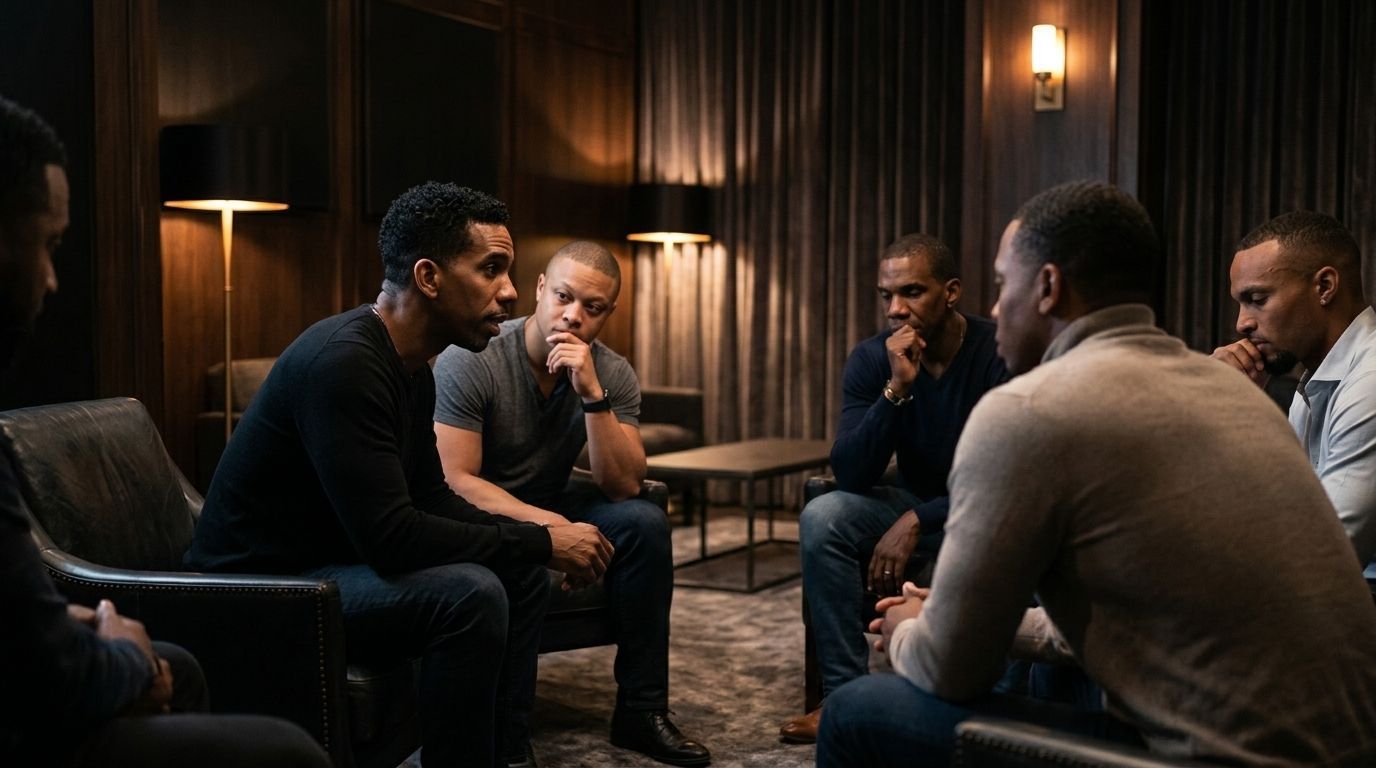
Many men live with the constant pressure to appear strong, confident, and always in control. Admitting fear, sadness, or emotional distress can feel like he is exposing a vulnerability that society has conditioned him he should never reveal. Unfortunately, suppressing emotions does not eliminate them. It cultivates depression and stoicism. Unresolved emotions often surface as irritability, anger, disappointment, emotional abandonment and withdrawal.
A man's ability to redefine his strength is essential to his mental health. True strength is the ability to face emotions honestly and responsibly.
Fear of Financial Instability
Financial security has long been tied to the traditional expectations of masculinity and responsibility. Many men feel pressured to provide stability for themselves, those they care about and the community. When financial uncertainty arises, it can trigger anxiety about identity, responsibility, self worth and the future.
This fear often pushes men toward overworking, performing, burnout, chronic stress and depression. Men who have a healthy sense of masculinity recognize that his worth is not determined solely by income, professional status, or material possessions but by his ability to be present for himself mentally, emotionally and fiscally.
Fear of Loneliness
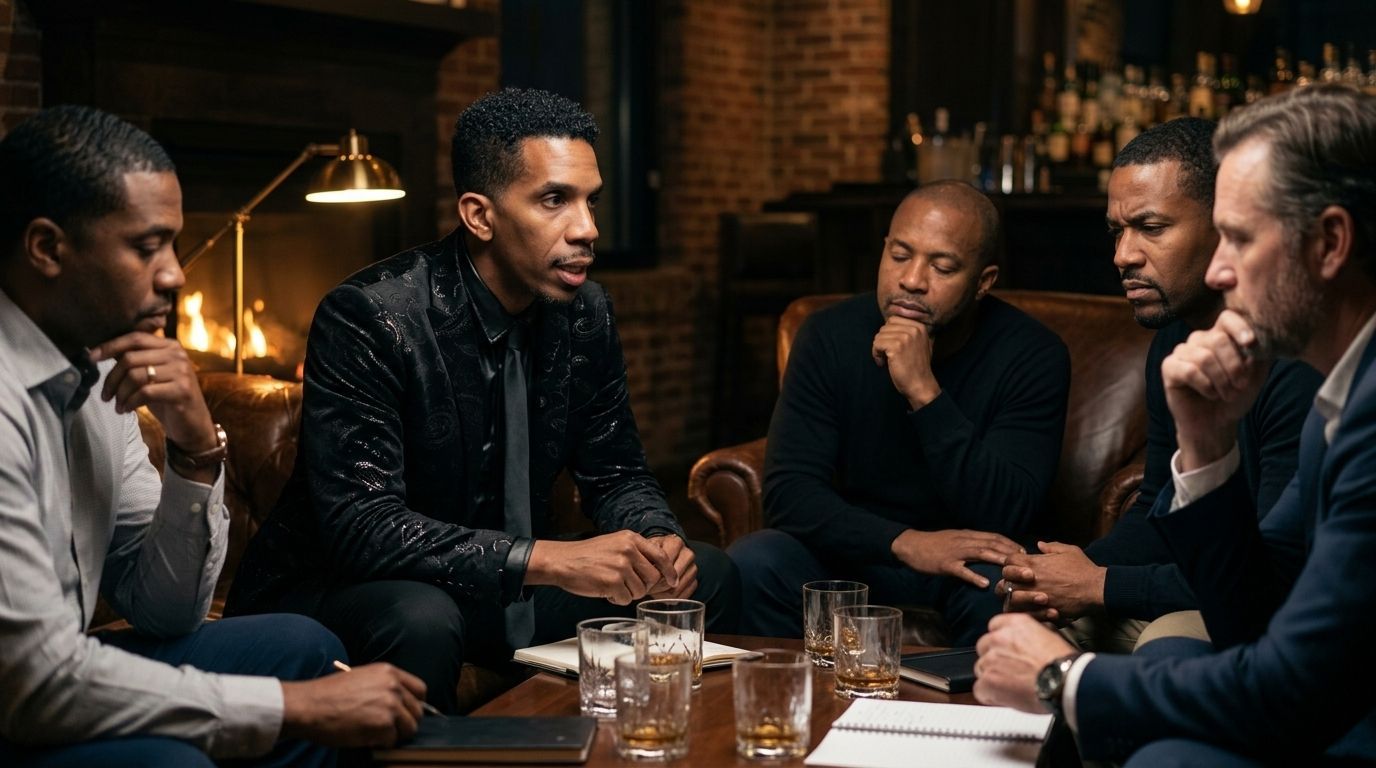
Despite the stereotype that men prefer independence, many men experience deep loneliness. Social norms often discourage emotional closeness between men, limiting opportunities for deep friendships and meaningful conversations.
As a result, many men rely primarily on romantic partners for emotional support. When those relationships are absent or end, men may find themselves emotionally isolated.
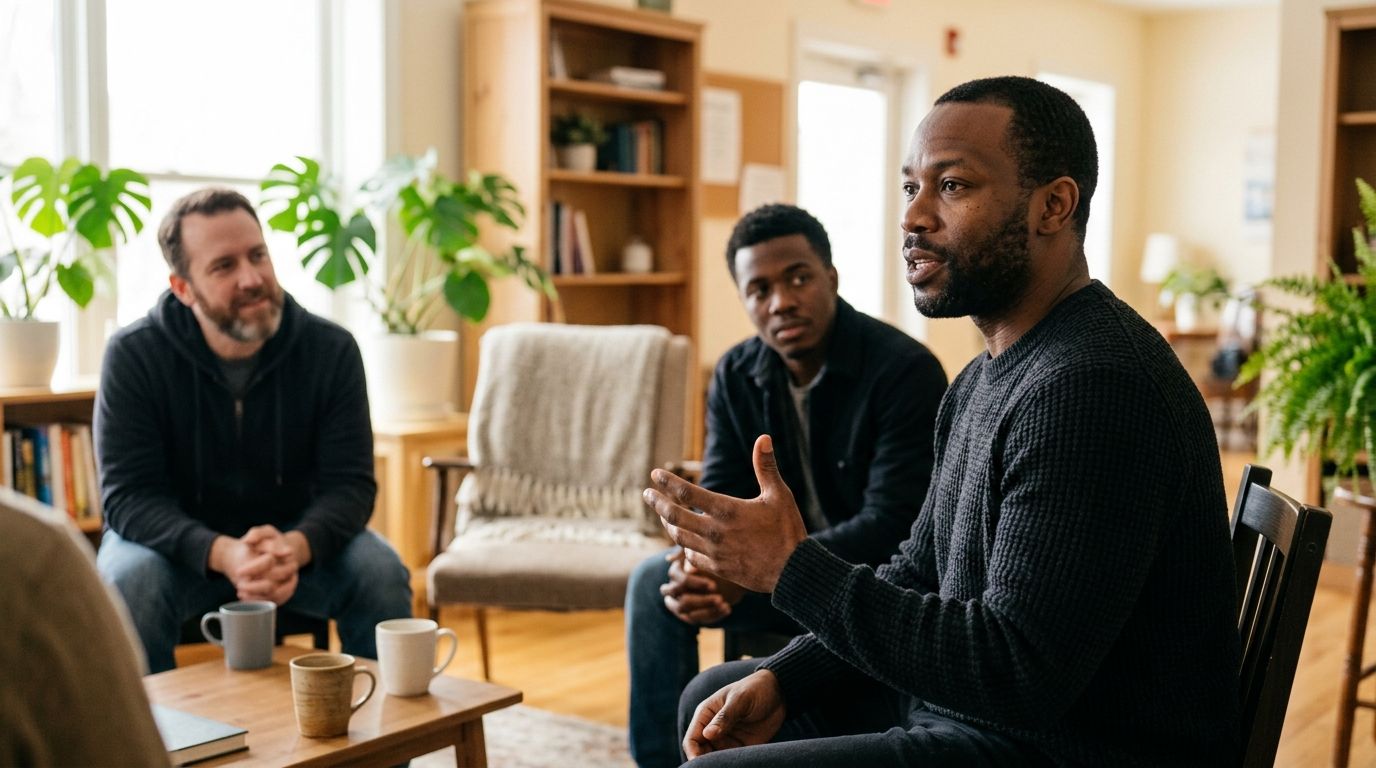
Brotherhood, friendship, and community are essential to men’s emotional health and well-being.
Fear of Aging and Losing Relevance
As men age, they often confront changes in identity, career roles, and physical ability. For some, these transitions create anxiety about relevance, desirability, and purpose. Yet aging also offers an opportunity for wisdom, mentorship, and deeper fulfillment. Men who focus on growth and contribution often discover that meaning expands with age rather than diminishes.
Fear of Not Living a Meaningful Life
Perhaps the deepest fear many men carry is existential. At some point, many men quietly ask themselves whether their life has truly mattered.
- Did they live authentically?
- Did they build meaningful relationships?
- Did they contribute something meaningful to the world?
This fear reflects the human need for purpose and legacy. When men begin to pursue purpose beyond external success, they often discover a deeper sense of fulfillment and direction.
Self Reflection Prompts
Take a moment to honestly reflect:
- Which of these fears have influenced your life the most?
- When did you first become aware of that fear?
- How might acknowledging it change the way you move forward?
Self-awareness is often the first step toward growth.
The Becoming Whole Perspective
The Becoming Whole framework encourages men to see fear not as weakness but as a signal pointing toward growth and wholeness. Through awareness, connection, brotherhood, and emotional development, men can transform fear into deeper understanding and purpose. Fear is not something to be ashamed or afraid of. It is something to understand.
Conclusion
Every man carries fears—some visible, others hidden beneath years of silence and expectation. These fears do not make men weak; they make them human. When men begin speaking honestly about their struggles and supporting one another, fear begins to lose its power. A meaningful life is built by embracing confronting it.