BLOG 3 — ESTEEM | Why Don’t I Feel Good Enough? How Men Can Rebuild Confidence, Self-Worth & Identity
By WiL Turner
Men’s Health Advocate, Fitness, Relationship & Personal Growth Coach Founder of Living Well With WiL & The Becoming Whole Men’s Health Movement
“Confidence grows differently when a man stops asking the world for permission to value himself.” — WiL Turner
Introduction
What happens when the promotion, relationship, body, home, money, recognition, or validation finally arrives and you still do not feel like enough? Many men learn to measure themselves through achievement. We ask what we earn, how we look, who wants us, what we own, what we have accomplished, and how our lives compare with those of other men.
Achievement can build confidence, but achievement alone cannot create lasting self-worth. When identity is constructed primarily around external validation, confidence becomes dependent upon circumstances that cannot always be controlled.
NEUROSCIENCE: VALIDATION, REWARD & COMPARISON
The brain’s reward systems respond to achievement, recognition, attraction, social approval, and accomplishment. These experiences can create genuine motivation and satisfaction. Problems emerge when external reinforcement becomes the primary evidence a man uses to determine his value.
Social comparison adds another layer. Constant exposure to curated images of other people’s bodies, careers, relationships, homes, wealth, vacations, and accomplishments creates endless opportunities to interpret ourselves as deficient.
A rejection may then feel disproportionately threatening because it does not simply represent the loss of one opportunity. It can threaten an identity built around being desirable, successful, respected, attractive, or accomplished.
WHY THIS MATTERS
The way a man sees himself influences nearly every area of his life. Self-worth affects the relationships he accepts, boundaries he establishes, opportunities he pursues, risks he takes, and treatment he believes he deserves.
Low esteem can also hide behind impressive accomplishments. A man may earn more, work harder, train obsessively, chase attention, seek sexual validation, or continually compare himself with others in an effort to answer one persistent question: “Am I enough?”
This matters because a man who does not recognize his own value becomes vulnerable to allowing other people to define it for him. Rejection becomes a verdict. Criticism becomes identity. Comparison becomes measurement.
DEMOGRAPHIC & SOCIAL-PSYCHOLOGICAL IMPACT
Black men may encounter cultural pressure to demonstrate financial stability, strength, success, competence, and respectability while simultaneously navigating racial stereotypes and systemic barriers. Gay men may encounter heightened appearance-based comparison, body-image pressure, rejection connected to race, age, masculinity, sexuality, or perceived desirability.
Straight men may evaluate worth through income, status, marriage, fatherhood, sexual success, athleticism, or provider roles. Young men increasingly encounter highly curated images of luxury, fitness, wealth, and masculinity before they have developed stable adult identities. Men over 40 may wrestle with aging, changing bodies, divorce, career plateaus, health concerns, and unmet expectations.
Different experiences may create different insecurities, but the underlying danger remains the same: allowing external standards to become the sole authority over self-worth.
IMPACT ON ROMANTIC RELATIONSHIPS
Low self-esteem can enter relationships disguised as jealousy, people-pleasing, insecurity, possessiveness, emotional dependence, or fear of abandonment. A man who does not believe he is worthy of love may tolerate disrespect simply to maintain connection.
Healthy esteem changes the question from “How do I make them value me?” to “Does this relationship reflect the value I have learned to recognize in myself?”
IMPACT ON FRIENDSHIP & BROTHERHOOD
Low esteem can turn friendship into competition. Another man’s success begins to feel like evidence of personal failure. Instead of inspiration, comparison creates resentment.
Healthy brotherhood allows men to celebrate one another without feeling diminished. It creates environments where accountability and encouragement can coexist.
BOUNDARIES & SOLUTIONS
Developing esteem requires more than positive affirmations. It involves keeping promises to yourself, establishing standards, building competence, caring for your health, practicing integrity, examining distorted beliefs, reducing unhealthy comparison, and learning to distinguish constructive feedback from rejection.
Sometimes rebuilding self-worth also means stepping away from relationships and environments that continually reinforce inadequacy.
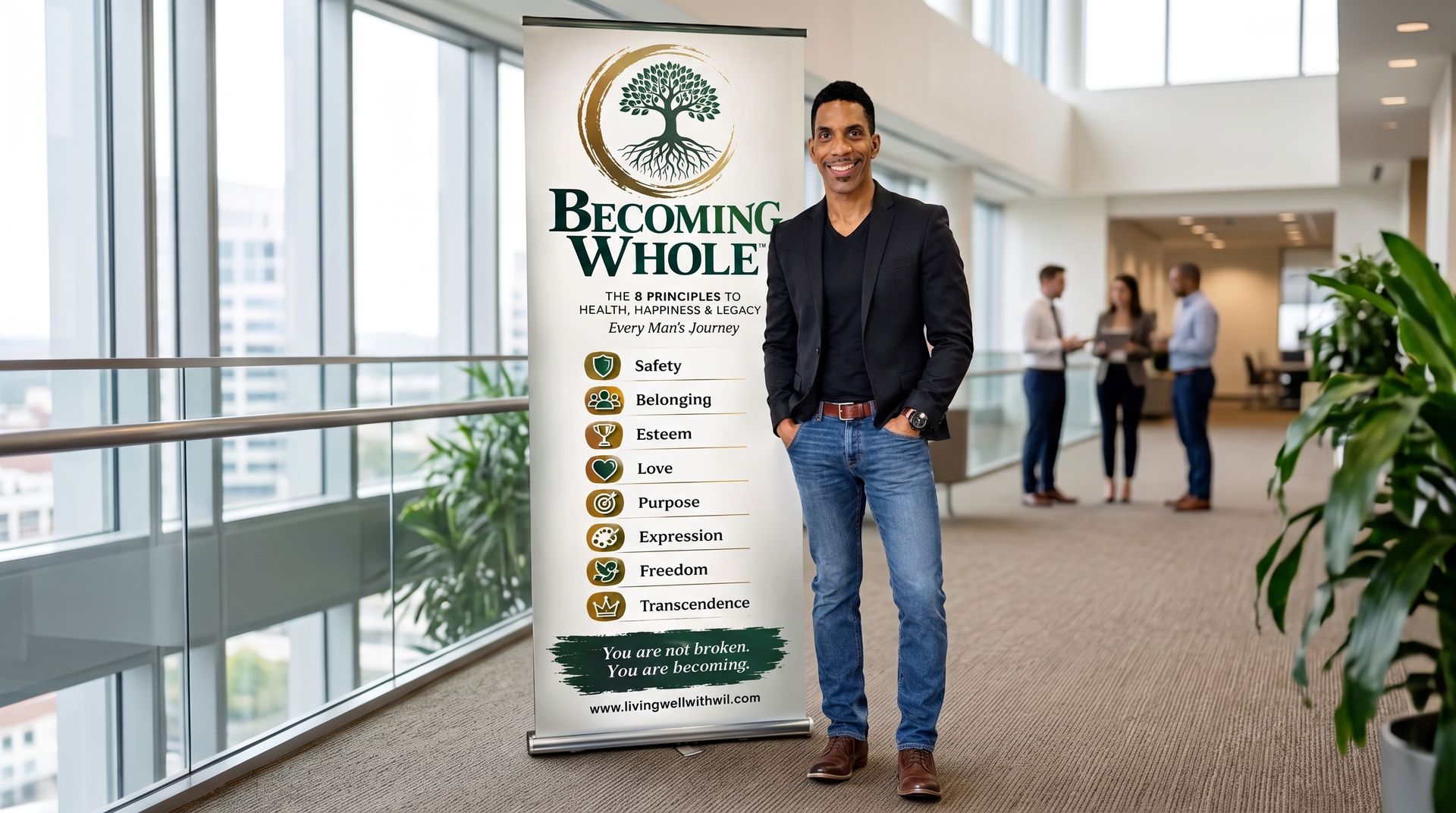
BECOMING WHOLE PRINCIPLE 3: ESTEEM
One of the most powerful questions a man can ask is, “Do I respect the man I am becoming?” That question moves the focus away from public approval and toward personal integrity.
Confidence is not believing you are better than everyone else. It is developing enough security to know that you do not have to be.
REFLECTION
- What have I been using to prove that I am worthy?
- Who would I become if I stopped measuring my life against everyone else’s expectations?
Explore Becoming Whole coaching, men’s groups, workshops, fitness resources, and personal-growth tools designed to help men strengthen confidence from the inside out.