Emotional Safety for Men: Healing Trauma & Reclaiming Security
Part 1 of the Becoming Whole Series
Written by
WiL Turner
Men’s Health, Wellness & Identity Coach |
Living Well With WiL
Estimated Read Time: 5 Minutes
“You may not control all the events that happen to you, but you can decide not to be reduced by them.” — Mahatma Gandhi
For many men, emotional safety is a concept they’ve never been taught — let alone lived. This first installment of the Becoming Whole series breaks down what safety really means for men’s healing, why so many of us were never given it, and how to rebuild it starting today.
What Is Emotional Safety? (Principle Defined)
In Maslow’s Hierarchy of Needs, safety forms the foundation upon which all personal growth is built. It goes beyond physical protection — it’s about emotional security, psychological stability, and the felt sense that your inner world is welcome and protected.
Safety is not simply the absence of danger — it’s the presence of peace.
Yet for many men — especially Black men, gay men, or those raised in violence, trauma, or silence — this kind of safety has never been accessible.
The Problem: Men Are Surviving, But Not Safe
Most of us were raised to perform toughness rather than embody truth. Emotional expression was framed as weakness. Vulnerability was labeled “feminine.”
We inherited scripts like:
- “Don’t cry.”
- “Man up.”
- “Handle it yourself.”
These ideas don’t build men — they break us from the inside out.
Without emotional safety:
- We suppress our emotions instead of processing them.
- We isolate ourselves instead of connecting with others.
- We react instead of responding.
The long-term cost is stress, relationship breakdowns, rage, addiction, and emotional disconnection from ourselves
The Solution: Rebuilding Emotional Safety in Men
General Practices for All Men
- Daily Grounding Ritual — Anchor yourself each morning with a safety cue (calming music, warm tea, stillness) and ask, “What do I need to feel safe today?”
- Set Safety Boundaries — Say no to conversations, environments, or relationships that force you to shrink or perform. Choose stillness over survival.
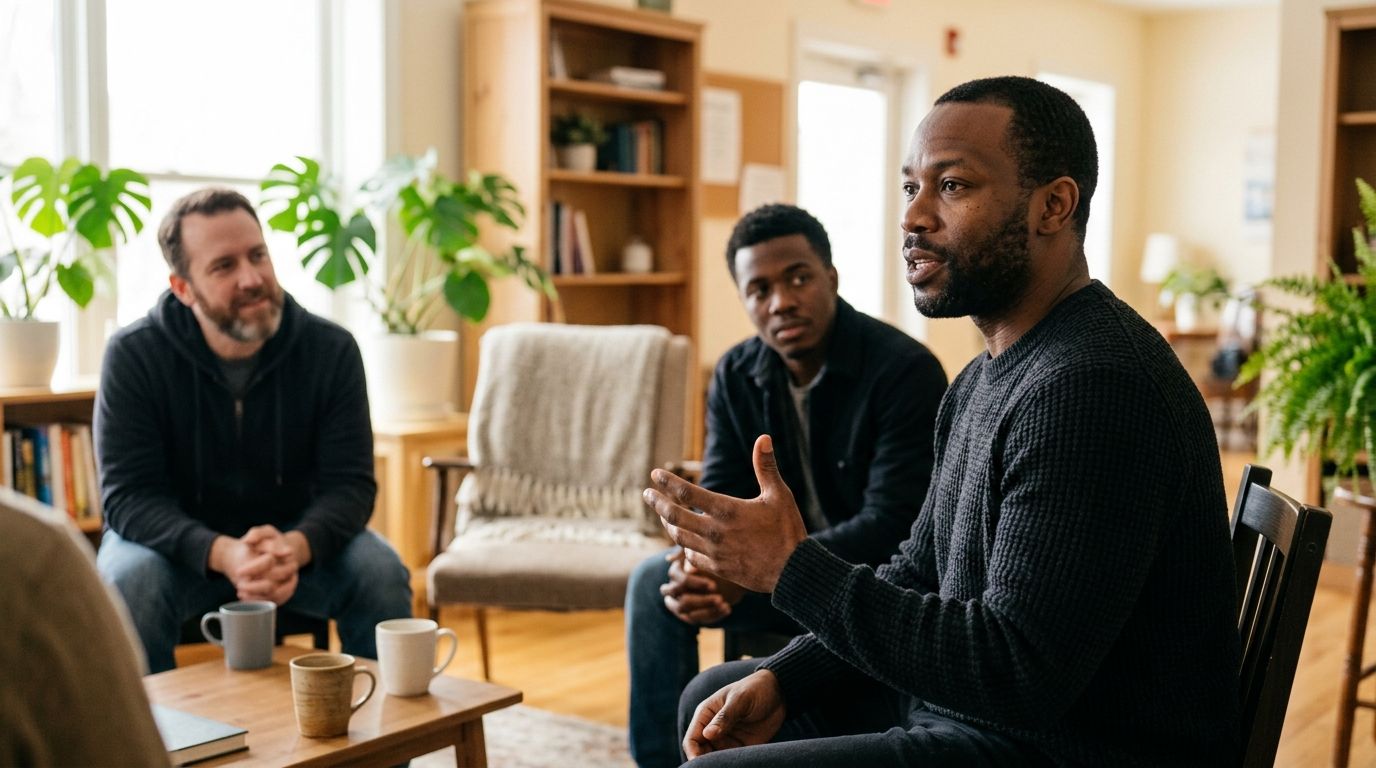
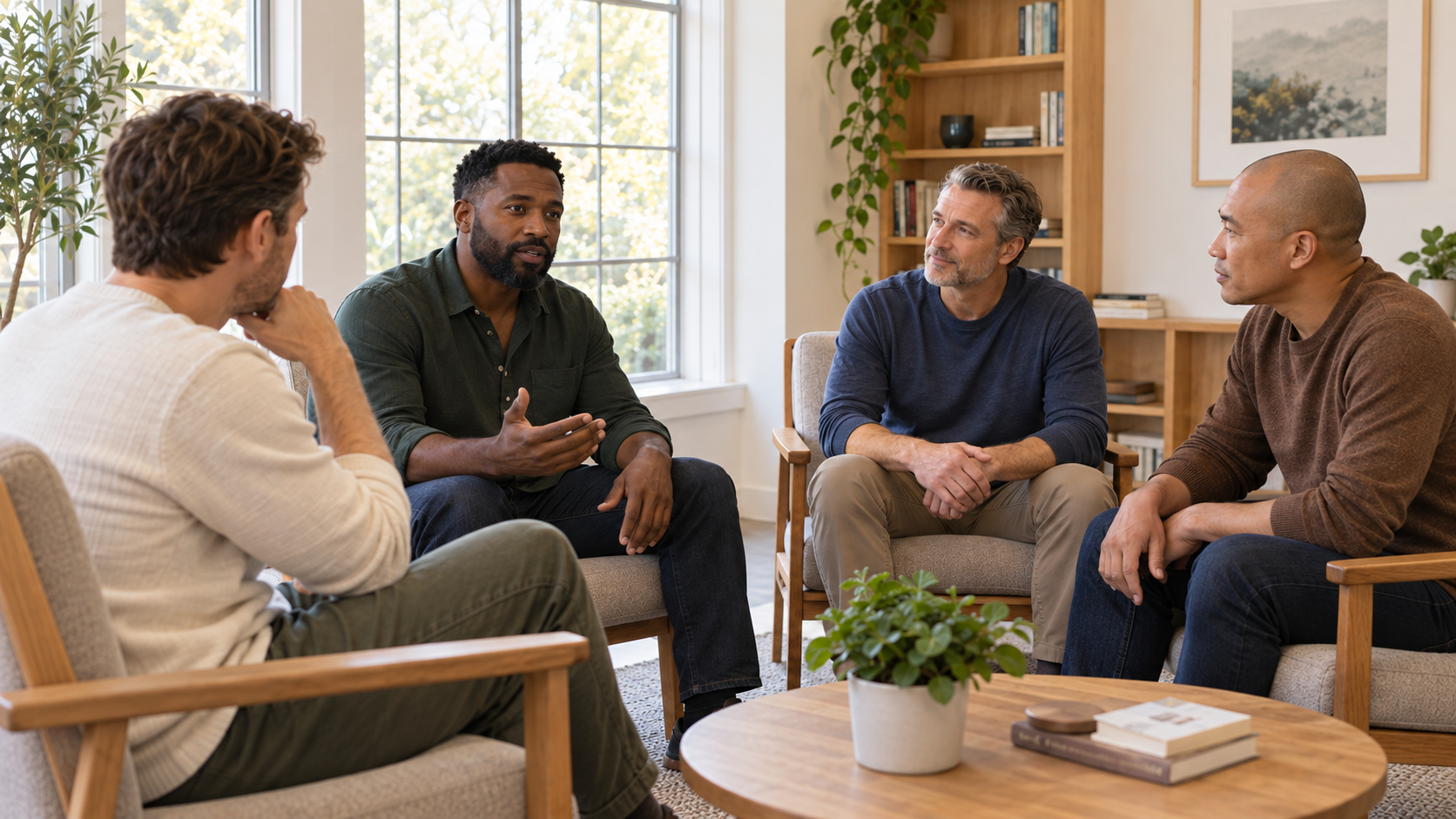
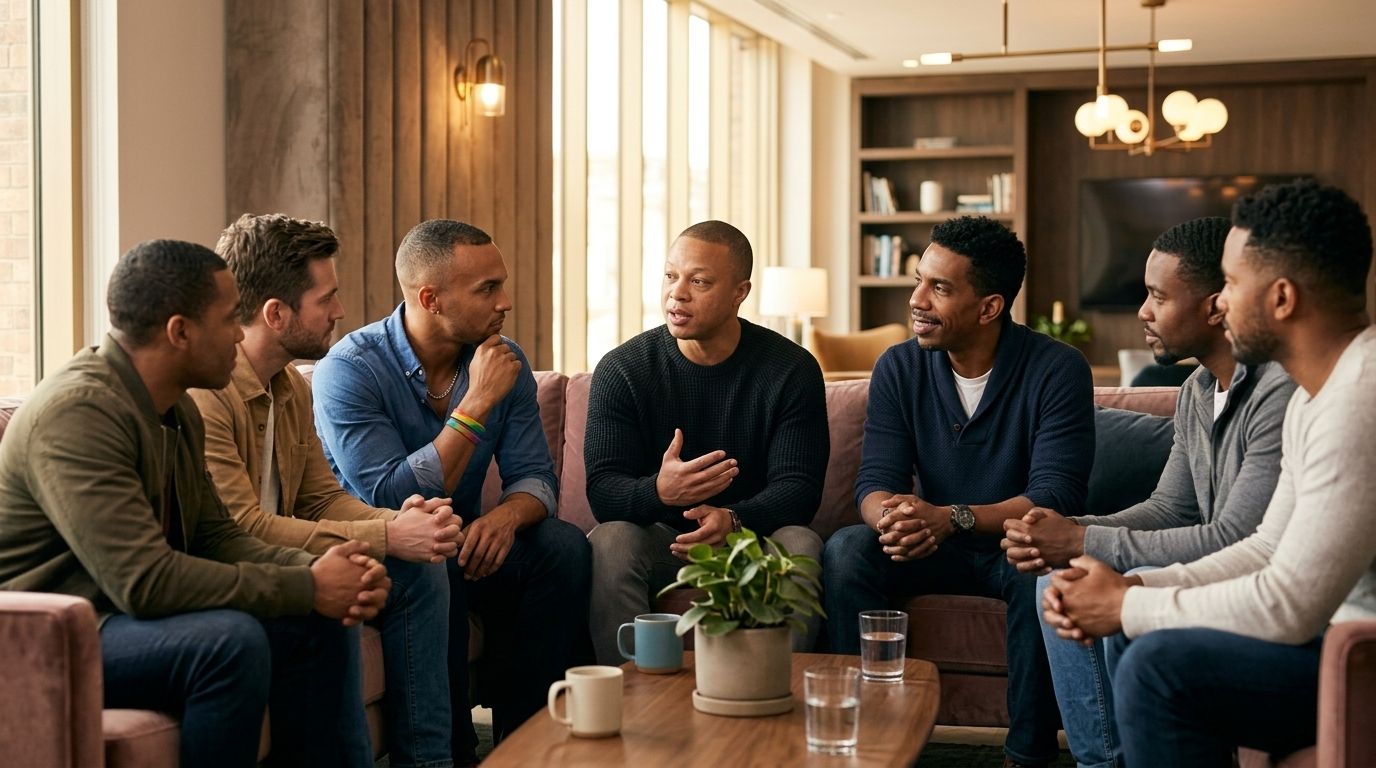
- Heal in Community — Find a trusted men’s group, therapist, or healing circle that sees and supports you without judgment.
- Feel Your Feelings, Fully — Let grief, anger, fear, or joy move through — don’t trap them inside. Movement, art, breathwork, or mindful crying are all valid.
Becoming Whole Workbook Practices
- “Map Your Safety Story” Exercise — Reflect on the first time you felt unsafe emotionally or physically. What messages did that moment teach you about trust, voice, and value?
- “Emotional Check-In” Worksheet — Daily prompt: What emotion am I avoiding today, and what is it trying to teach me?
- “Safe Space Builder” Tool — Create a space in your environment that soothes your nervous system. Include affirmations, scents, objects, or rituals that represent healing.
- “5-5-5 Breathwork Reset” — Inhale for 5 seconds → Hold for 5 → Exhale for 5 → Repeat 3 times while reciting: “I am safe. I am grounded. I am here.”
Reflect + Reclaim
Workbook Prompt: “When have I felt most unsafe in my life — and what do I need now to feel safe, calm, and whole?”
Emotional Safety for Men: Healing Trauma & Reclaiming Security
Why do men struggle with emotional safety? Most men are raised on scripts like “man up” and “handle it yourself,” which teach them to suppress emotion rather than process it. Over time, this creates chronic stress, disconnection, and difficulty trusting others — even when there’s no real danger present.
What does emotional safety look like in practice? Emotional safety looks like being able to name your feelings without shame, set boundaries without guilt, and feel physically and mentally at ease in your own body and relationships. It’s built through consistent, small practices — not a single breakthrough.
How can men start healing from trauma without therapy? While professional support is invaluable, men can begin with grounding rituals, breathwork (like the 5-5-5 reset), journaling prompts, and community spaces like men’s groups. These practices build the foundation that makes deeper healing — including therapy — more accessible.